
Copper Concentrate Suppliers — Zambia & DR Congo, 20–45% Cu
Sulphide & oxide concentrate · priced on payable copper, DMT basis
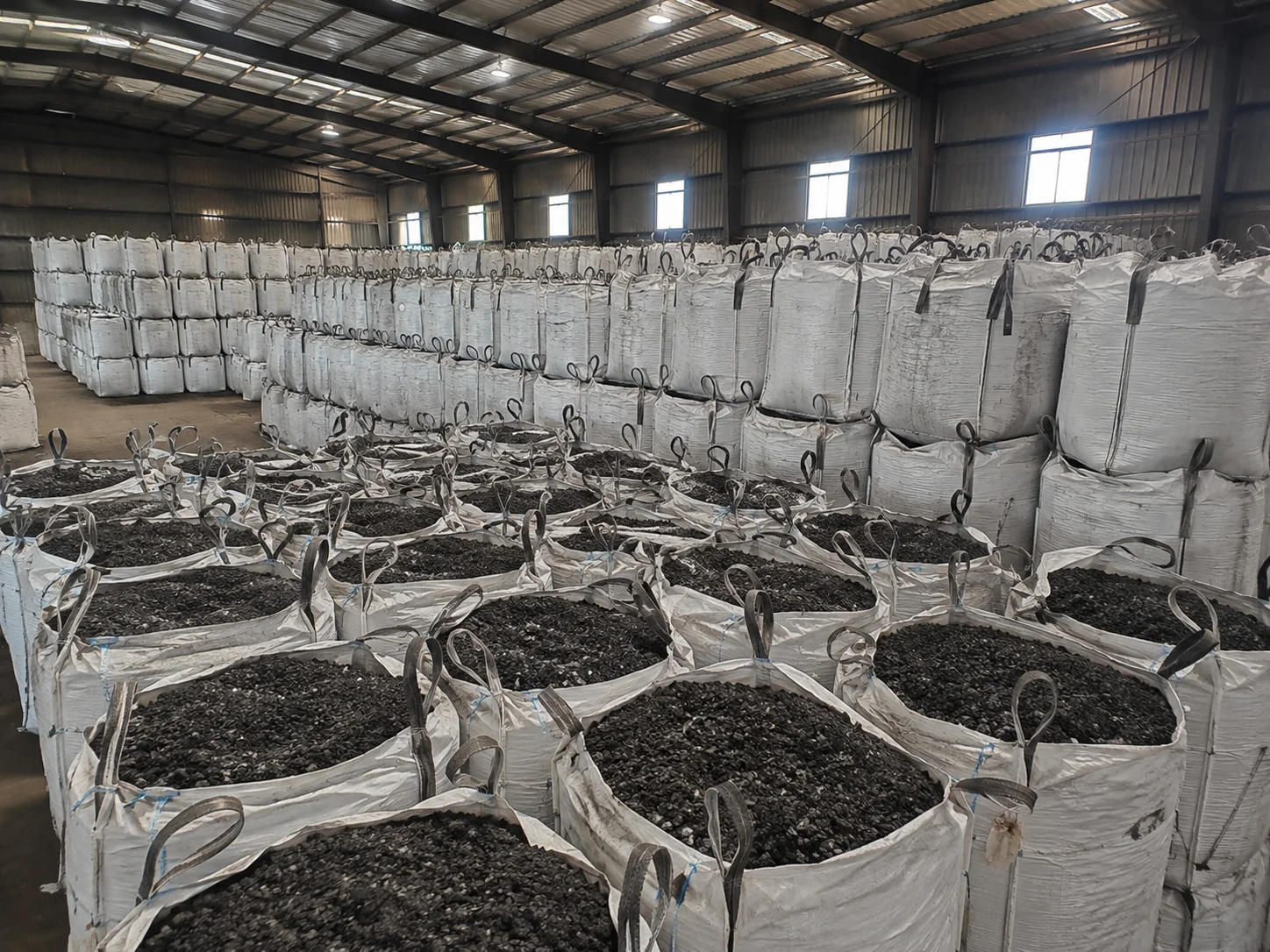
Copper concentrate is the product of crushing, milling and flotation of copper ore, typically containing between 20% and 45% copper by dry weight. It is the feedstock of smelters worldwide, and it is one of the principal mineral exports of the Democratic Republic of the Congo and Zambia.
SokoDolla supplies copper concentrate to smelters, refineries and traders, sourced from verified producers in the Haut-Katanga and Lualaba provinces of the DRC and across the Zambian Copperbelt. We verify the counterparty, inspect the material, arrange independent sampling, and support the transaction through to loading.
Concentrate is quoted on a dry metric tonne basis against payable copper content, so the commercial detail matters more than in refined metal: moisture, payable percentage, treatment and refining charges, and any penalty elements all bear on the final invoice. We set these out explicitly in every quotation.
Specification & Commercial Terms
| Product | Copper concentrate — sulphide and oxide |
|---|---|
| Commercial specification | Lot-specific assay covering Cu%, moisture and deleterious elements |
| Copper content | Typically 20% – 45% Cu (lot-specific, per assay) |
| Origin | DR Congo (Haut-Katanga, Lualaba) · Zambia (Copperbelt) |
| Particle size | Fine milled concentrate / filter cake, typically ~80% passing 75–106 µm |
| Moisture | Typically 8% – 10%, maximum around 12% — deducted on a DMT basis |
| Packing | 1 MT bulk bags or manufacturer packing on wooden pallets |
| Loading port | Dar es Salaam, Tanzania (also Durban, Beira) |
| Pricing basis | Payable Cu% × LME, less treatment and refining charges, per DMT |
| Typical destinations | China, South Korea, Japan, India, Turkey, UAE and the European Union |
| Inspection | SGS, Alex Stewart or Bureau Veritas at loading; OCC certification at origin |
Specifications are indicative and confirmed lot by lot. Final grade and quantity are governed by the independent assay at loading Port.
What We Verify Before You Commit
We verify the counterparty, applicable licences, authority to sell, product documentation and independent inspection requirements before a buyer commits. Every engagement follows the SokoDolla Verification Standard.
Buy Copper Concentrate from Zambia & DRC
SokoDolla helps smelters, refiners and commodity buyers source copper concentrate from verified suppliers in Zambia and the DRC. Enquiries are matched to copper grade, dry metric tonnes, moisture, impurity profile, delivery point and commercial terms.
For buyers looking for copper concentrate suppliers in Zambia, the key commercial questions are Cu grade, payable copper, moisture, penalty elements, assay basis, treatment and refining charges, origin documentation and loading arrangements. These details should be stated clearly before a purchase is agreed.
Copper Concentrate Price & Pricing Formula
Concentrate pricing is not a single number but a calculation. The starting point is the payable copper: the contained copper percentage confirmed by assay, less a small non-payable deduction, multiplied by the LME copper price over the agreed quotational period.
From that gross metal value, the smelter’s treatment charge (TC, expressed per dry metric tonne of concentrate) and refining charge (RC, expressed per pound of payable copper) are deducted. Penalty elements — arsenic, lead, bismuth, fluorine and others above threshold levels — may attract further deductions, while precious-metal credits for gold and silver may be added where the material carries them and an accredited assay confirms them.
Some offers from the region simplify this into a single headline figure such as “LME minus a percentage”, which folds treatment charges and penalties into one discount. That is workable provided the basis is stated in writing. What matters is that you know precisely which formula governs the final invoice before you sign, and that settlement is against a loading assay by an accredited laboratory.
Wet Versus Dry Metric Tonnes
Concentrate is shipped wet and sold dry. The material carries moisture — typically 8% to 10% — and payment is made on the dry weight after that moisture is determined and deducted. This is the single most common source of misunderstanding in first-time concentrate purchases.
A quotation of a given price “per tonne” means nothing until it specifies wet metric tonnes or dry metric tonnes. Every quotation we issue states the DMT basis explicitly, and moisture is determined at loading by draft survey and laboratory assay rather than by the seller’s declaration.
Treatment and Refining Charges (TC/RC)
The treatment charge is what the smelter deducts for converting concentrate into metal. It is quoted in US dollars per dry metric tonne of concentrate. The refining charge is the further deduction for refining the resulting copper to cathode grade, and it is quoted in US cents per pound of payable copper. The two move together and are normally written as a pair, for example 80/8.0 — eighty dollars per DMT and eight cents per payable pound.
TC/RC levels are set annually between the major miners and the Asian smelters as a benchmark, and they move independently in the spot market according to how much concentrate is chasing how much smelting capacity. When smelters are short of feed, treatment charges fall and the seller keeps more of the metal value; when concentrate is plentiful, they rise. A concentrate offer that does not state its TC/RC assumption is not yet a price.
The quotational period is the second half of the calculation. It is the agreed window of LME prices used to value the payable copper — commonly the calendar month of arrival, the month following arrival, or an average across a stated number of trading days. Two contracts at identical TC/RC can settle materially apart simply because one prices off the month of shipment and the other off the month of discharge, so the quotational period is fixed in writing at the outset.
Penalty Elements, Assay and Settlement Rules
Deleterious elements carry deductions above agreed thresholds. Arsenic, lead, bismuth, antimony, mercury, fluorine and chlorine are the ones most often penalised, because they complicate smelting or end up in the smelter’s emissions. Zinc and excess silica may also attract deductions depending on the receiving plant. Each element has a free limit, and above it a stated charge per unit of excess, so a high-grade concentrate with an awkward impurity profile can settle below a cleaner lot of lower copper content.
Settlement runs on the assay, and the assay procedure is a contractual matter in itself. Buyer and seller each take a sample at loading and have it analysed independently. Where the two results fall within an agreed splitting limit — commonly 0.3% on copper — the results are averaged. Where they fall outside it, an umpire laboratory nominated from an agreed panel analyses a sealed third sample, and the umpire figure governs, with the cost falling on the party whose result was further away.
Weight is treated the same way. A weight franchise of around 0.5% is customary, within which the loaded and discharged weights are taken to agree; outside it, the discharge weight governs. These provisions sound technical, but they are what turn a concentrate contract into something that can be settled without dispute, and we insist that all of them appear in the Sale and Purchase Agreement rather than being left to custom.
Shipping Copper Concentrate from Dar es Salaam
Concentrate from the Zambian Copperbelt and the DRC reaches the sea through the Dar es Salaam corridor, with Durban, Beira and the Lobito line as alternatives. Inland haulage from Kitwe, Ndola, Lubumbashi or Kolwezi typically runs 7 to 14 days to the port, depending on the border post and the season.
Most trade-sized parcels move containerised: one-tonne bulk bags loaded into 20-foot containers, usually around 25 to 27 MT per box, which suits lot sizes from a single container up to a few thousand tonnes and keeps the material dry and segregated by lot. Larger programmes move break-bulk or in a chartered vessel’s hold, which is cheaper per tonne but only economic above roughly 5,000 MT.
Copper concentrate is a Group A cargo under the IMSBC Code, meaning it can liquefy if the moisture content exceeds the transportable moisture limit. A certificate of the transportable moisture limit and of the actual moisture content at loading is therefore required before a master will accept the cargo, and it is issued as part of the loading inspection alongside the quality and quantity certificates.
Why Buyers Source Copper Concentrate Through SokoDolla
Specification is the easy part. These are the things that decide whether a shipment actually happens.
Lots inspected and sampled before they are offered
Concentrate is offered only once the stockpile has been seen, the lot identified and quantified at the warehouse, and an independent sample drawn for assay. Copper content, moisture and impurity elements come from a laboratory report, not from a seller’s specification sheet.
The pricing formula written out in full
Every quotation states payable copper percentage, the LME reference and quotational period, treatment and refining charges, penalty thresholds and the DMT basis. You see how the invoice is calculated before you commit, not after the vessel sails.
Origin and export documentation verified
Mining and export licences checked against the CAMI cadastre or the Zambian Mining Cadastre Portal, and OCC certification reviewed where the material originates in the DRC. Material that cannot evidence lawful origin does not get offered.
FOB Dar es Salaam or CIF to your smelter
Containerised in bulk bags for trade-sized parcels, or break-bulk for larger programmes, routed through Dar es Salaam, Durban or Beira with the transportable moisture limit certificate and loading inspection built into the plan.
Settlement against documents and assay
Documentary letter of credit at sight under UCP 600, or staged telegraphic transfer released against verified milestones. Final settlement follows the loading assay by an accredited laboratory, with the umpire procedure agreed in advance.
Documentation Per Consignment
A complete document set is a condition of every shipment we support. Each item below is verified rather than accepted at face value.
- Certificate of Origin (Form A), issued by the local Chamber of Commerce
- Export permit and mineral export authorisation
- OCC quality specification stating actual chemical composition, quantity and non-radioactivity
- SGS or equivalent Certificate of Quality and Quantity issued at the loading port
- Signed commercial invoice, cargo manifest and packing list (container tallying report)
- Full set of 3/3 clean-on-board negotiable Bills of Lading, blank endorsed, freight prepaid
- Marine insurance policy at 110% of invoice value (CIF terms)
Frequently Asked Questions
Is the quantity quoted in wet or dry metric tonnes?
Dry metric tonnes. The material ships wet, moisture is determined by assay and draft survey at loading, and the moisture content is deducted so that you pay only for dry contained material.
What copper grade should we expect from DRC concentrate?
Material from the DRC Copperbelt commonly assays between 20% and 45% Cu, with 25% to 38% the most frequently traded range. Grade is lot-specific: an indicative laboratory report is provided at offer stage, and the SGS assay taken at loading governs settlement.
Are gold and silver credits included?
Generally not for Central African copper concentrate, where precious-metal content is usually low and often not assayed. Where an independent assay confirms payable gold or silver above the customary thresholds, credits can be agreed on standard commercial terms.
Is the material from a single mine or blended?
Both occur. Some suppliers offer single-source production; others aggregate and blend material from several licensed operations at a central warehouse before homogenising and sampling each lot. We confirm which applies to your consignment during verification, because it affects grade consistency across shipments.
Who pays for inspection at the loading port?
This is a commercial term rather than a fixed rule — in many contracts the seller bears loading-port inspection and the buyer bears any discharge-port re-inspection. Whichever applies, it is stated in the offer, and buyers are always free to appoint their own inspector at their own cost.
How much is copper concentrate per ton?
There is no single figure, because concentrate is priced by formula rather than by list. The payable copper — the assayed Cu percentage less a small non-payable deduction — is valued at the LME copper price over the agreed quotational period, and treatment and refining charges and any penalty deductions are taken off that. A 30% Cu concentrate therefore carries roughly 300 kg of contained copper per dry tonne before those deductions, and the final per-tonne figure moves with the LME daily. We quote the full formula and a worked example against the current LME rather than a headline number.
What is payable copper and why is it less than the assayed grade?
Smelters do not recover every gram of copper in the concentrate, so contracts pay on a percentage of the assayed content rather than all of it. The customary treatment is to deduct one unit of copper — that is, a 30% Cu concentrate pays on 29% — or to apply a payable rate in the region of 96% to 96.5% of contained metal, whichever the contract specifies. Both conventions are in use, and the offer states which one governs.
What are TC/RC charges on copper concentrate?
The treatment charge is the smelter’s deduction for turning concentrate into metal, quoted in US dollars per dry metric tonne of concentrate. The refining charge is the further deduction for refining to cathode grade, quoted in US cents per pound of payable copper. They are written as a pair, such as 80/8.0, and they move with the balance between concentrate supply and smelting capacity. Any concentrate quotation should state its TC/RC assumption explicitly.
What is the minimum order quantity for copper concentrate?
Trial lots commonly start at one 20-foot container of roughly 25 MT, and regular programmes are usually structured in monthly parcels of 500 to 5,000 MT. Below about 5,000 MT the material normally moves containerised in one-tonne bulk bags; above that, break-bulk becomes economic. The workable minimum depends on the supplier and the delivery terms and is confirmed with your quotation.
Which impurities attract penalties?
Arsenic, lead, bismuth, antimony, mercury, fluorine and chlorine are the elements most often penalised, with zinc and excess silica deducted at some plants. Each has a free limit written into the contract, and above that limit a stated charge applies per unit of excess. Because of this, a cleaner concentrate of lower copper grade can settle better than a higher-grade lot with a difficult impurity profile, which is why the full assay matters rather than the Cu percentage alone.
Can you supply copper concentrate CIF China, Korea, Japan or India?
Yes. CIF to Chinese, South Korean, Japanese and Indian discharge ports is the most common structure for concentrate out of the Dar es Salaam corridor, and CIF Turkey, the UAE and the European Union are also served. FOB Dar es Salaam suits buyers who control their own ocean freight. Note that CIF and CFR are sea terms — for an inland destination such as an Indian container depot, CIP or DAP is the correct Incoterms 2020 rule and we structure the offer accordingly.
What payment terms apply to copper concentrate?
Settlement is in US dollars and is structured by the quantity ordered. Orders below 1,000 MT are settled by telegraphic transfer only, in milestones of 30% / 40% / 30% — on signature of the Sale and Purchase Agreement and completion of independent pre-shipment inspection, against the shipping documents including the clean-on-board Bill of Lading, and on arrival at the discharge port. Orders of 1,000 MT and above are settled 15% by telegraphic transfer on the same first basis and 85% by irrevocable letter of credit opened before loading. A provisional invoice is normally raised on the loading assay, with a final invoice once the settlement assay and weights are agreed.
Copper Concentrate we supply
Material we source and ship from our own supply channels. Order to your specification — pricing is quoted against the LME.
Sourcing by Country & Current Pricing
Verified supplier pages by origin, plus how copper is priced against the LME today.
Copper Suppliers in Zambia
Verified Copperbelt exporters — cathodes, concentrate and wire.
Open pageCopper Suppliers in DRC
Verified Katanga exporters with CAMI and ICGLR checks.
Open pageCopper Price Today
LME basis, premiums and the concentrate price-per-ton formula.
Open pageExport Logistics
Dar es Salaam, Durban and Lobito corridors, Incoterms 2020.
Open pageTell Us What You Need
Send us your specification, tonnage and delivery terms. We respond with a quotation, the verification scope, and clear next steps — no obligation.

